Overview
Shan Zhu Yu is sour, astringent and slightly warm, entering the Liver and Kidney.1,2,3
It augments the Liver and Kidneys, secures the primal qi and stops excessive sweating.2
It both tonifies the essence and assists the Yang, so it is used for deficiency of the Liver and Kidneys with dizziness, sore lower back and knees, or impotence.2
Identity and sources
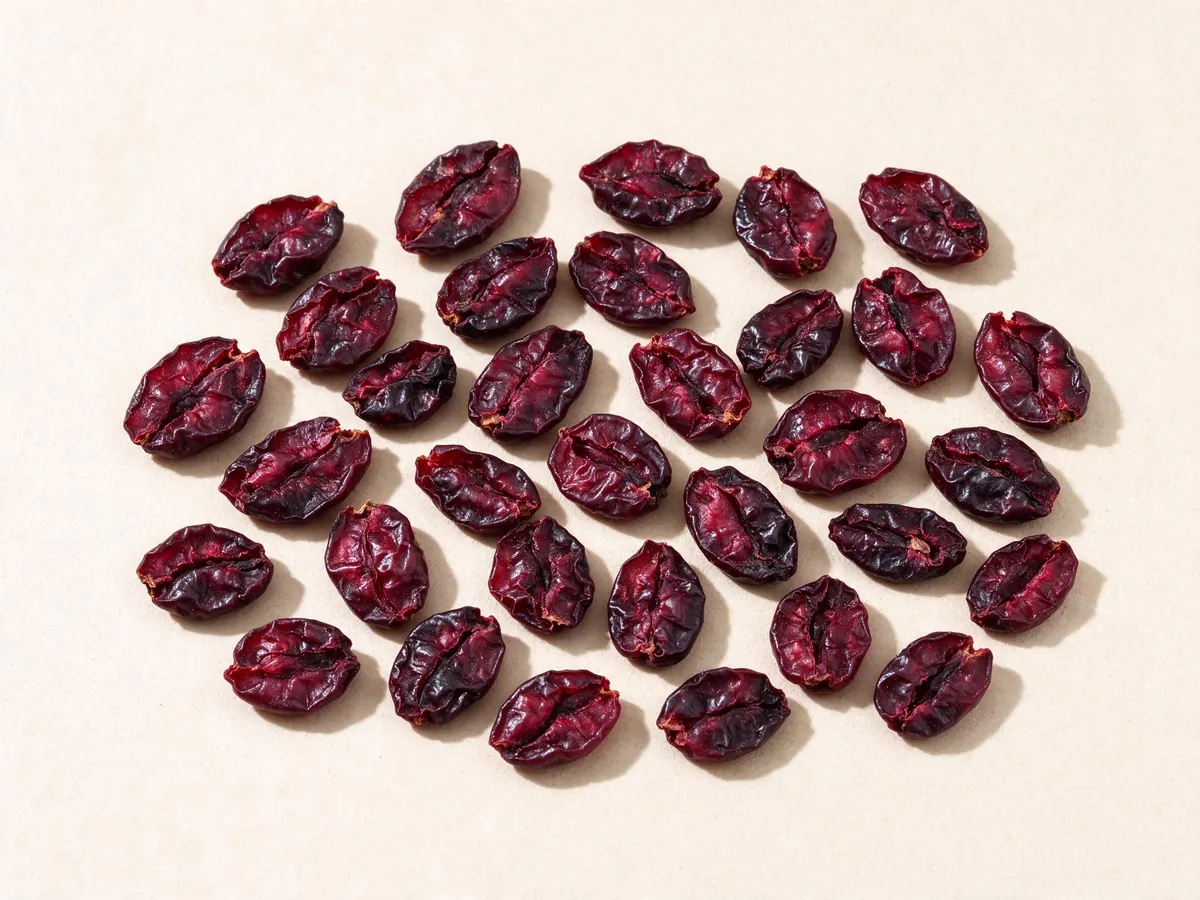
The medicinal material is the dried ripe fruit flesh of Cornus officinalis.1
The seeds are removed before use.1
Taiwan grades it mildly warm, sour and astringent, entering the Liver and Kidney, with a 5-12 g dose.3
Actions
- Stabilizes the Kidneys and secures the essence. For urinary frequency, incontinence, spermatorrhoea and excessive sweating from weak essence.2
- Stops excessive sweating and supports collapse. For profuse sweating from devastated Yang and collapsed Qi, as in shock, and for sweating that was mistakenly induced.2
- Tonifies and augments the Liver and Kidneys. For lightheadedness, dizziness, soreness and weakness of the lower back and knees, and impotence.2
- Stabilizes the menses and stops bleeding. For excessive uterine bleeding and prolonged menstruation from deficiency; its effect on the bleeding is weak.2
Clinical applications
Kidney deficiency and leakage
For urinary frequency, incontinence, spermatorrhoea and excessive sweating from weak essence.2
Collapse and sweating
For profuse sweating from devastated Yang and collapsed Qi, as in shock.2
It is also used when sweating has been mistakenly induced as a treatment.2
Liver and Kidney deficiency
For lightheadedness, dizziness, soreness and weakness of the lower back and knees, and impotence.2
Uterine bleeding
For excessive uterine bleeding and prolonged menstruation from deficiency, though its effect on the bleeding is weak.2
Key combinations
With Psoraleae Fructus and Angelica sinensis, it is used for Kidney Yang insufficiency with an unstable lower base, giving spermatorrhoea, premature ejaculation and lower backache.2
With Schisandra, it is used for spermatorrhoea, abnormal sweating, palpitations and shortness of breath from Yin and Yang deficiency of the Liver and Kidneys.2
With Alpiniae oxyphyllae Fructus and Bai Zhu, it is used for urinary incontinence in the elderly from Kidney Qi deficiency.2
With Fossilia Ossis Mastodi, Ostreae Concha, prepared Aconite and Ginseng, it is used for profuse sweating from devastated Yang.2
With Huang Qi and Codonopsis, it is used for spontaneous sweating from Yang or Qi deficiency.2
With Angelica sinensis and prepared Rehmannia, it is used for night sweats from Yin deficiency.2
With prepared Rehmannia and Dioscorea in Six-Ingredient Pill with Rehmannia, it is a basic combination for tonifying the Kidneys.2
With prepared Aconite and Cervi Cornus Colla added, it is used for primarily Kidney Yang deficiency, as in Restore the Right Pill; with Lycium added, for true Yin deficiency, as in Restore the Left Pill.2
With Eucommia and Spatholobus, it is used for hypertension from Liver and Kidney deficiency.2
With Bai Shao and Ejiao, it is used for dark, thick uterine bleeding that alternates between trickling and gushing from heat from Yin deficiency.2
With Sepia, Qian Cao and charred Trachycarpi Petiolus, it is used for thin, pale, profuse uterine bleeding that gushes or trickles from instability of the Penetrating vessel.2
With Huang Qi and Fossilia Ossis Mastodi in Stabilize Gushing Decoction, it is used for uterine bleeding from unstable Penetrating and Conception vessels with Spleen Qi deficiency.2
Comparison with similar herbs
| Form | Key difference |
|---|---|
| Shan Zhu Yu 山茱萸 | Sour, astringent and slightly warm. Augments the Liver and Kidneys, secures the primal qi and stops excessive sweating.2 |
Processing and preparation
The fruit flesh is cleaned of pits and impurities to give Shan Yu Rou.1
Wine-prepared Cornus (Jiu Yu Rou) is made by stewing or steaming the clean flesh with wine until the wine is absorbed; the slices are purple-black or black, soft and moist, with a faint wine aroma.1
Wine-preparation makes the herb warmer and slightly acrid, and less sour and astringent; it tonifies the Liver and Kidneys while harmonising the Blood and invigorating the collaterals.2
It is used for aching lower back from Kidney weakness or chronic rib pain from Liver deficiency failing to nourish the collaterals.2
Steamed Cornus is steamed until black and sun-dried; it tonifies the Liver and Kidneys while still stabilizing and retaining the essence.2
It is used for vertigo, impotence, premature ejaculation, frequent and profuse urination, and excessive uterine bleeding from deficiency.2
Safety
Contraindications
Urinary pain and difficulty, and Damp-heat.2
The traditional texts add blazing fire at the gate of vitality with frequent erections, and clumped Bladder heat impeding urination, which should be treated by clearing heat and promoting urination instead.2
Interactions
Traditional sources say it antagonises Platycodon, Saposhnikovia and Fangji.2
Modern research
A review of Cornus officinalis found that about 300 compounds have been isolated from the fruit.4
Its main active components are organic acids and iridoids, especially morroniside and loganin.4
The review lists hepatic and renal protection, antidiabetic, cardioprotective, antioxidant, neuroprotective, antitumour, anti-inflammatory, analgesic, antiageing, antiamnesia, antiosteoporosis and immunoregulatory activity.4
Dose and administration
The official reference dose is 6-12 g.1
The official dose in Taiwan is 5-12 g.3
This is a reference range, not a safe upper limit.
Common questions
Why is it used for sweating?
It stops excessive sweating and supports collapse, including profuse sweating from devastated Yang and collapsed Qi in shock.2
Can it be used for uterine bleeding?
It stabilizes the menses and stops bleeding in deficiency patterns, but its effect on the bleeding is weak.2
When should it be avoided?
It is contraindicated with urinary pain and difficulty or Damp-heat, and traditionally with blazing fire at the gate of vitality causing frequent erections, or clumped Bladder heat impeding urination.2
References
- Chinese Pharmacopoeia Commission. Pharmacopoeia of the People's Republic of China, 2020 edition, Volume I. Beijing: China Medical Science Press; 2020. Part I, pp. 29-30.
- Bensky D, Clavey S, Stöger E. Chinese Herbal Medicine: Materia Medica. Portable 3rd edition. Seattle: Eastland Press; 2015. pp. 857-859.
- Ministry of Health and Welfare. Taiwan Herbal Pharmacopoeia, 4th edition (English edition). Taipei; 2022, with 2025 amendments where cited. p. 123.
- Huang J, Zhang Y, Dong L, Gao Q, Yin L, Quan H, Chen R, Fu X, Lin D. Ethnopharmacology, phytochemistry, and pharmacology of Cornus officinalis Sieb. et Zucc. J Ethnopharmacol. 2018;213:280-301. doi:10.1016/j.jep.2017.11.010 pubmed.ncbi.nlm.nih.gov/29155174
Educational reference only. Not medical advice or an individual prescription. Consult a qualified practitioner before using any herb or treatment.