Overview
Chuan Lian Zi is bitter and cold, and slightly toxic, entering the Small Intestine, Bladder and Liver.1
One clinical text also gives the Stomach channel, with a bitter, cold and slightly toxic flavour.2
It dredges Liver Qi, releases constraint, stops pain, conducts heat out from below and kills parasites.1,2
It is toxic in overdose, and toosendanin, its main constituent, is hepatotoxic.2,3
Identity and sources
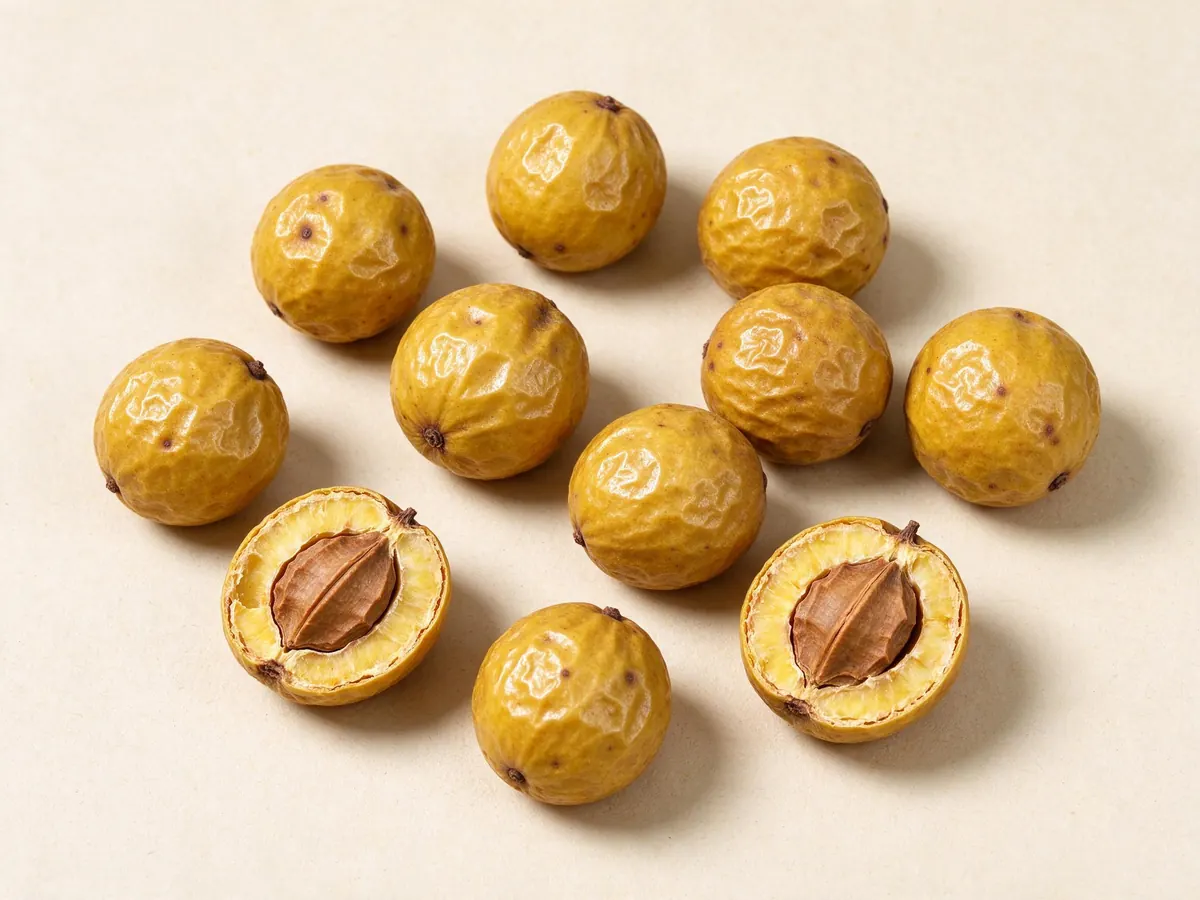
The medicinal material is the dried ripe fruit of Melia toosendan.1
The fruit is cleaned and crushed for use, or stir-fried until the surface is scorched yellow.1
Actions
- Dredges Liver Qi, releases constraint and stops pain. For chest and rib pain, distention and pain from Liver-Stomach disharmony, and bulging disorders; it is most useful for problems involving heat.2
- Kills parasites and stops pain. For roundworms and tapeworms; it is not strongly parasiticidal but relieves the abdominal pain of parasite accumulation, and is applied topically for scalp dermatosis.2
Clinical applications
Liver constraint pain
For pain in the chest and ribs, and distention and pain from Liver-Stomach disharmony.2
For bulging disorders; it is most useful for problems involving heat.2
For bulging disorders, especially those involving heat.2
Menstrual pain
For menstrual pain with irritability from Liver constraint with heat.2
Parasite pain
For the abdominal pain associated with roundworm or tapeworm accumulation.2
Key combinations
With Corydalis in Melia Toosendan Powder, it is used for intermittent epigastric and hypochondriac pain, bulging disorders, and menstrual pain with irritability from Liver constraint with heat.2
With Rehmannia and Lycium in Linking Decoction, it is used for hypochondriac and chest pain, dry mouth and acid regurgitation from Liver Qi stagnation with Liver and Kidney Yin deficiency.2
With Foeniculum and Evodia in Conduct the Qi Decoction, it is used for the pain of cold-type bulging disorders.2
Comparison with similar herbs
| Form | Key difference |
|---|---|
| Chuan Lian Zi 川楝子 (raw) | Bitter and cold, slightly toxic. Dredges Liver Qi, stops pain and conducts heat out from below.2 |
| Chao Chuan Lian Zi 炒川楝子 | Dry-fried until deeper yellow and slightly scorched; this reduces its bitter cold so that it does not upset the digestion.2 |
| Cu Chao Chuan Lian Zi 醋炒川楝子 | Soaked in rice vinegar and dry-fried; this enhances its pain-stopping action and warms its nature to prevent digestive upset.2 |
Processing and preparation
The fruit is cleaned and crushed when used.1
Stir-frying until the surface is scorched yellow gives Chao Chuan Lian Zi.1
Dry-frying reduces its bitter cold, and vinegar-frying enhances pain relief and warms its nature.2
Safety
Contraindications
Cold from deficiency of the Spleen and Stomach.2
The traditional texts say it is strongly contraindicated in Spleen and Stomach cold from deficiency.2
Toxicity
Overdose affects the nervous system with headache, blurred or double vision, slurred speech, laboured breathing, tremor, spasms, numbness of the limbs and weakness.2
It can cause nausea, vomiting, abdominal pain, diarrhoea, jaundice and toxic hepatitis.2
It can also cause arrhythmia, damage to the heart muscle, epistaxis, bloody stools, haematuria, low blood pressure and shock.2
Toosendanin, its main constituent, is hepatotoxic.3
Do not self-treat with this herb.
Modern research
Toosendanin, a tetracyclic triterpenoid from Melia toosendan and M. azedarach, inhibits cancer cell proliferation, induces apoptosis, suppresses migration and inhibits angiogenesis.3
Its hepatotoxicity significantly limits its therapeutic use, and newer delivery strategies aim to reduce it.3
Dose and administration
The official reference dose is 5-10 g.1
This is a reference range, not a safe upper limit.
Common questions
What is Chuan Lian Zi used for?
It dredges Liver Qi, releases constraint and stops pain for chest, flank and abdominal pain, bulging disorders and parasite pain.2
How toxic is it?
When should it be avoided?
It is contraindicated in Spleen and Stomach cold from deficiency.2
References
- Chinese Pharmacopoeia Commission. Pharmacopoeia of the People's Republic of China, 2020 edition, Volume I. Beijing: China Medical Science Press; 2020. Part I, p. 41.
- Bensky D, Clavey S, Stöger E. Chinese Herbal Medicine: Materia Medica. Portable 3rd edition. Seattle: Eastland Press; 2015. pp. 544-546.
- Li S, Xiong Q, Shen Y, Lin J, Zhang L, Wu Y, Jin J, Luan X. Toosendanin: upgrade of an old agent in cancer treatment. Chin J Nat Med. 2024;22(10):887-899. doi:10.1016/S1875-5364(24)60693-X pubmed.ncbi.nlm.nih.gov/39428181
Educational reference only. Not medical advice or an individual prescription. Consult a qualified practitioner before using any herb or treatment.